
Secure Document Sharing: The Complete Guide to Protecting Confidential Documents Online
What Is Secure Document Sharing?
In today’s digital business environment, documents are shared more frequently than ever before. Contracts, financial reports, legal agreements, investor presentations, confidential client information, creative assets, and business proposals are routinely exchanged between employees, clients, partners, and stakeholders across the globe.
While sharing documents online has become incredibly convenient, it has also introduced significant security risks. Traditional methods of sending documents, such as email attachments and public cloud storage links, often provide little to no control once a document has been delivered.
This is where secure document sharing becomes essential.
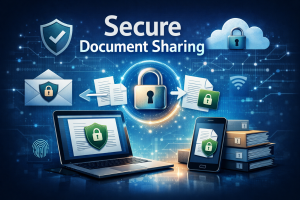
Secure document sharing refers to the process of distributing documents through protected systems that safeguard sensitive information during storage, transfer, and access. Modern secure document sharing platforms allow organizations to maintain control over documents even after they have been sent, reducing the risk of unauthorized access, accidental exposure, and data breaches.
As businesses face increasing cybersecurity threats and stricter compliance requirements, secure document sharing has become a critical component of modern information management.
Why Traditional Document Sharing Is No Longer Enough
For many years, email attachments were the standard method of document exchange. While convenient, email was never designed to provide ongoing control over shared information.
Once an attachment is sent:
The sender loses visibility.
The document can be forwarded indefinitely.
Copies may be stored permanently.
Unauthorized recipients may gain access.
There is typically no way to revoke access.
Cloud storage platforms improved collaboration but introduced a different challenge. Shared links can often be copied, forwarded, or accessed by unintended recipients if permissions are not carefully managed.
Organizations handling sensitive information require far greater control than traditional sharing methods can provide.
Secure document sharing addresses these limitations by placing control, visibility, and security at the center of the sharing process.
The Growing Importance of Document Security
Businesses today operate in an environment where information is one of their most valuable assets.
Confidential documents may contain:
Financial data
Legal agreements
Intellectual property
Client information
Investor communications
Employee records
Strategic plans
A single leaked document can result in:
Financial losses
Legal liability
Regulatory penalties
Reputational damage
Loss of competitive advantage
As remote work, digital collaboration, and global partnerships continue to expand, organizations need secure methods of sharing information without sacrificing productivity.
Secure document sharing enables businesses to collaborate efficiently while protecting sensitive data from unauthorized access.
👉 Start Free Trial (No Credit Card Required)
Key Features of Secure Document Sharing
Not all document sharing solutions provide the same level of protection.
The most effective secure document sharing platforms include several essential security and control features.
Password Protection
Password-protected documents require recipients to enter a password before access is granted.
This simple but effective layer of security helps prevent unauthorized viewing if a link is accidentally shared or intercepted.
Password protection is particularly useful for:
Legal documents
Financial reports
Investor materials
Client records
👉 Related reading: Password Protected File Transfer Online
Access Control
Modern secure document sharing platforms allow users to define exactly who can access a document.
Access controls may include:
User-specific permissions
Email-based authentication
Domain restrictions
Role-based access settings
These controls ensure that only authorized individuals can view sensitive information.
👉 Related reading: Can You Revoke Access to a Shared File?
File Recall and Revocation
One of the most valuable features of advanced secure document sharing systems is the ability to revoke access after a document has been sent.
Traditional email attachments cannot be recalled once delivered.
Secure document sharing platforms allow users to:
Disable document access instantly
Revoke sharing links
Remove permissions
Prevent future viewing
This capability provides ongoing control over shared information.
👉 Related reading: How to Recall a Sent File?
Document Expiry Controls
Not every document should remain accessible forever.
Secure sharing systems often allow users to:
Set expiration dates
Define access windows
Automatically disable links after a specified period
Expiry controls help reduce long-term exposure and improve information governance.
Access Tracking and Analytics
Visibility is a critical aspect of secure document sharing.
Advanced systems provide detailed activity tracking, including:
Who viewed the document
When access occurred
Number of views
Viewing duration
Engagement patterns
These insights help organizations understand recipient behaviour while maintaining accountability.
👉 Related reading: How to Track Who Opened a File?
Watermark Protection
Watermarking adds an additional layer of deterrence against unauthorized distribution.
Watermarks may include:
User names
Email addresses
Company names
Timestamps
Visible ownership indicators reduce the likelihood of document misuse.
👉 Related reading: Secure File Sharing for Accountants
Industries That Depend on Secure Document Sharing
Legal Services
Law firms routinely exchange highly confidential documents.
Examples include:
Contracts
Court filings
Discovery materials
Settlement agreements
Secure document sharing helps legal professionals protect client confidentiality while maintaining compliance requirements.
👉 Related reading: Secure File Sharing for Lawyers
👉 Start Free Trial (No Credit Card Required)
Accounting and Financial Services
Accountants and financial advisors frequently share:
Tax returns
Financial statements
Audit reports
Investment documents
Protecting sensitive financial information is critical to maintaining trust and regulatory compliance.
👉 Related reading: Secure File Sharing for Accountants
Healthcare
Healthcare organizations manage large volumes of sensitive patient information.
Secure document sharing supports privacy requirements while enabling collaboration among healthcare providers.
Technology Companies
Technology firms often exchange proprietary information, source code documentation, and intellectual property.
Secure document sharing helps prevent unauthorized disclosure of valuable business assets.
Media and Entertainment
Film studios, production companies, and creative agencies frequently distribute confidential scripts, production materials, and creative assets.
Secure sharing helps protect intellectual property and reduce piracy risks.
Secure Document Sharing for Due Diligence
One of the fastest-growing use cases for secure document sharing involves due diligence processes.
Organizations conducting:
Mergers and acquisitions
Capital raises
Investor reviews
Strategic partnerships
must often share highly sensitive information with external parties.
Secure document sharing platforms provide:
Controlled access
Activity tracking
Permission management
Document recall
Audit trails
These capabilities help organizations manage risk during high-stakes transactions.
Related reading: Secure Due Diligence Document Sharing
Compliance Benefits of Secure Document Sharing
Regulatory compliance is becoming increasingly important across many industries.
Secure document sharing supports compliance efforts by helping organizations:
Control access to sensitive data
Maintain audit trails
Demonstrate information governance
Protect confidential records
Reduce unauthorized disclosures
These capabilities can support broader cybersecurity and privacy initiatives.
Secure Document Sharing vs Traditional Cloud Storage
Many organizations assume cloud storage platforms automatically provide secure document sharing.
However, there are important differences.
Traditional cloud storage focuses primarily on:
Storage
Synchronization
Collaboration
Secure document sharing focuses on:
Control
Visibility
Access management
Recall capabilities
Document protection
The difference is significant.
Cloud storage helps users store files.
Secure document sharing helps organizations control information.
Best Practices for Secure Document Sharing
To maximize security, organizations should follow several best practices.
Use Strong Access Controls
Limit document access to individuals who genuinely require it.
Enable Password Protection
Protect sensitive files with additional authentication requirements.
Monitor Activity
Review document access logs regularly.
Use Expiration Settings
Avoid leaving sensitive documents accessible indefinitely.
Revoke Access When Necessary
Remove access immediately when documents are no longer required.
Train Employees
Security technology is most effective when supported by strong user awareness.
The Future of Secure Document Sharing
The future of document management is moving toward greater control and visibility.
Organizations increasingly expect the ability to:
Track document engagement
Control access dynamically
Revoke permissions instantly
Protect intellectual property
Monitor information flow
As cybersecurity threats continue to evolve, secure document sharing will become an increasingly important component of modern business operations.
👉 Start Free Trial (No Credit Card Required)
Conclusion
Secure document sharing is no longer a luxury reserved for large enterprises. It has become an essential requirement for businesses of all sizes that handle confidential information.
By combining password protection, access controls, document tracking, recall capabilities, and audit visibility, secure document sharing platforms provide a far higher level of protection than traditional email attachments or basic cloud storage links.
As organizations continue to exchange sensitive information in an increasingly digital world, secure document sharing will play a critical role in protecting data, maintaining compliance, and preserving trust.
Businesses that invest in secure document sharing today are better positioned to manage risk, protect intellectual property, and maintain control over their most valuable information.
👉 Related reading: How to Recall a Sent File?