
Secure File Sharing: The Complete Guide to Safe, Controlled Document Distribution
In a world where business moves at the speed of email—and breaches can happen in seconds—secure file sharing is no longer optional. It is a foundational requirement for any organisation handling sensitive information, from financial records and legal contracts to creative assets and confidential proposals.
Yet despite its importance, many teams still rely on outdated methods like email attachments, untracked cloud links, or consumer-grade storage tools. These approaches create invisible risks: files are forwarded without permission, downloaded without oversight, and stored indefinitely on devices you don’t control.
Secure file sharing solves this problem by giving organisations full control over how files are accessed, distributed, and protected—without slowing collaboration.
👉 Related reading: Can You recall a sent file?
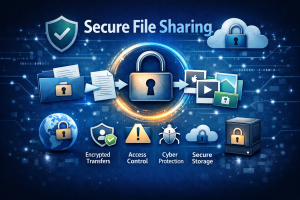
What Is Secure File Sharing?
Secure file sharing is a controlled method of distributing digital files where the sender retains authority over:
- Who can access the file
- How long they can access it
- What they can do with it (view, download, edit, forward)
- Whether access can be revoked at any time
Unlike traditional file sharing, which often relies on static attachments or public links, secure file sharing platforms introduce dynamic access controls. This means permissions can change in real time—even after a file has been sent.
In practical terms, it turns a static document into a controlled digital asset.
👉 Related reading: Secure Due Diligence Document Sharing
👉 Start Free Trial (No Credit Card Required)
Why Traditional File Sharing Is Risky
Most people underestimate how exposed standard file sharing methods really are.
1. Email Attachments Have No Control Layer
Once you send an attachment, you lose visibility and control. It can be:
- Forwarded endlessly
- Downloaded and stored permanently
- Accessed on unsecured devices
There is no way to revoke access after sending.
👉 Related reading: Secure File Sharing for Accountants
2. Public Cloud Links Are Often Permanent
Services like basic cloud storage platforms allow users to generate shareable links. While convenient, these links often:
- Remain active indefinitely
- Can be shared outside intended recipients
- Offer little or no tracking
A single leaked link can expose sensitive information to unintended audiences.
3. No Audit Trail or Accountability
In many industries—finance, legal, real estate, media—knowing who accessed what and when is critical.
Traditional sharing methods provide no audit trail, making compliance and accountability extremely difficult.
Core Features of Secure File Sharing Systems
Modern secure file sharing platforms introduce a suite of controls designed to eliminate these risks.
Password-Protected Access
Files can be locked behind unique passwords, ensuring that even if a link is intercepted, it cannot be opened without authorisation.
This is especially useful for:
- Investor documents
- Legal agreements
- Internal business reports
👉 Related reading: How to Recall a Sent File?
Expiring Access Links
One of the most powerful features is time-based access control.
You can set:
- 1-hour access for urgent reviews
- 24-hour access for approvals
- 7-day access for project collaboration
After expiry, the link becomes inactive automatically.
This reduces long-term exposure risk dramatically.
👉 Related reading: How to Recall a Sent File?
Real-Time Access Tracking
Secure file sharing systems often include analytics dashboards showing:
- Who opened the file
- When it was accessed
- How many times it was viewed
- Whether it was downloaded
This transforms file sharing from blind distribution into measurable engagement.
👉 Related reading: Can You Revoke Access to a Shared File?
Remote File Recall
Perhaps the most important enterprise feature is instant revocation.
If a file is:
- Sent to the wrong person
- Shared prematurely
- No longer valid
You can disable access instantly—no matter where it has been sent.
👉 Related reading: How to Track Who Opened a File?
Watermarking for Protection
Dynamic watermarking can embed:
- Recipient email
- Timestamp
- Company branding
This discourages unauthorised redistribution and helps trace leaks back to their source.
👉 Start Free Trial (No Credit Card Required)
Who Needs Secure File Sharing?
While it benefits almost every organisation, some industries rely on it more heavily.
Finance and Investment
Sensitive materials like:
- Pitch decks
- Capital raising documents
- Forecast models
These require strict access control due to regulatory and competitive sensitivity.
Legal Services
Law firms regularly exchange:
- Contracts
- Evidence files
- Confidential client data
Secure sharing ensures privilege and confidentiality are maintained.
Creative Agencies
Designers, filmmakers, and marketing teams share:
- Large media files
- Unreleased creative work
- Client campaigns
Secure sharing prevents leaks before official launch dates.
Corporate Teams
Internal documents such as:
- HR files
- Strategy decks
- Operational reports
benefit from controlled distribution and tracking.
The Business Benefits of Secure File Sharing
Beyond security, there are significant operational advantages.
1. Improved Professionalism
Branded, secure links create a polished, enterprise-level impression compared to generic attachments.
2. Reduced Risk Exposure
Every controlled access point reduces the likelihood of:
- Data leaks
- Intellectual property theft
- Compliance breaches
3. Better Collaboration
Teams can still work quickly while maintaining control, striking a balance between speed and security.
4. Audit-Ready Compliance
For regulated industries, having a record of file access is essential for audits and reporting.
Common Mistakes Businesses Make
Even organisations that use secure file sharing tools often make mistakes that weaken protection.
Mistake 1: Over-sharing access
Giving too many users permanent access defeats the purpose of controlled distribution.
Mistake 2: Ignoring expiry settings
Leaving links active indefinitely creates unnecessary long-term risk.
Mistake 3: Not reviewing access logs
Tracking is only useful if it is actively monitored.
Mistake 4: Mixing personal and business tools
Using consumer-grade tools for sensitive corporate data creates blind spots in security.
How Secure File Sharing Fits Into Modern Workflows
Today’s digital workflows are distributed, fast-moving, and often remote.
Secure file sharing integrates into:
- Cloud storage systems
- CRM platforms
- Project management tools
- Investor relations workflows
- Creative production pipelines
This means security doesn’t slow work down—it becomes part of the workflow itself.
Future of Secure File Sharing
The next generation of secure file sharing is moving toward:
- AI-based anomaly detection (flagging unusual access behaviour)
- Automated permission suggestions
- Smart expiry based on file sensitivity
- Deeper integration with identity verification systems
Security is becoming adaptive rather than static.
👉 Start Free Trial (No Credit Card Required)
Final Thoughts
Secure file sharing is no longer just a technical feature—it is a business necessity.
In a digital environment where information is constantly moving, copied, and forwarded, control is everything. Organisations that implement secure sharing practices gain not only protection, but also clarity, accountability, and confidence in every document they send.
Whether you’re sharing a pitch deck with investors or a confidential contract with partners, the ability to control access after sending is what defines modern secure communication.