
Secure File Sharing for Agencies: The Complete Guide to Safe Client Collaboration and Document Management
Introduction
Agencies operate in one of the most fast-paced, client-driven environments in business.
Whether it’s a marketing agency, creative studio, digital consultancy, media production company, or branding firm, agencies constantly exchange sensitive and high-value files with clients and external stakeholders.
These files often include:
- Marketing strategies and campaign plans
- Creative assets (designs, videos, copywriting)
- Client budgets and financial performance reports
- Confidential proposals and pitches
- Analytics dashboards and performance data
- Brand guidelines and intellectual property
Despite the sensitivity of this information, many agencies still rely on outdated file sharing methods such as email attachments, WhatsApp messages, or generic cloud storage links.
While convenient, these tools introduce serious limitations around control, visibility, and security once a file is sent.
This is where secure file sharing for agencies becomes essential.
Secure file sharing platforms allow agencies to maintain control over documents even after they are shared, ensuring better security, accountability, and client trust.
In this guide, we’ll explore why agencies need secure file sharing, what risks traditional tools create, and what features modern secure document control systems should include.
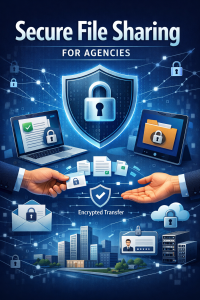
Why Agencies Need Secure File Sharing
Agencies deal with a constant flow of confidential and commercially sensitive information.
Unlike many industries, agency work is highly collaborative and involves multiple external parties, including clients, freelancers, contractors, and partners.
This creates a complex document-sharing environment where control is easily lost.
Common agency documents include:
Client Strategy Documents
- Marketing strategies
- Advertising plans
- Go-to-market strategies
- Campaign frameworks
Creative Assets
- Brand designs
- Video content
- Copywriting drafts
- Website mockups
Commercial Information
- Budgets
- Pricing strategies
- Media spend breakdowns
- Performance reports
Confidential Communication
- Client proposals
- Pitch decks
- Internal recommendations
- Competitive analysis
If any of this information is exposed, forwarded, or accessed by the wrong party, it can result in:
- Loss of competitive advantage
- Damage to client relationships
- Revenue leakage
- Reputational harm
- Breach of confidentiality agreements
Because agencies operate in highly competitive markets, protecting this information is critical.
Secure file sharing helps mitigate these risks by ensuring that control over documents does not end at the moment of sending.
👉 Start Free Trial (No Credit Card Required)
The Problem With Traditional File Sharing in Agencies
Email Attachments
Email is still one of the most widely used methods of file sharing in agencies, but it has major limitations:
- No control after sending
- No visibility into document access
- No way to revoke access
- Files can be forwarded without permission
- No engagement tracking
- No security enforcement
Once a file is sent via email, it effectively leaves the agency’s control entirely.
This is especially risky when dealing with confidential client information or unreleased creative work.
Consumer Cloud Storage Tools
Many agencies use tools like shared folders or generic cloud links.
While these tools improve collaboration, they still fall short in key areas:
- Limited visibility over who accessed files
- No real-time engagement tracking
- Difficult permission management at scale
- Files can still be downloaded and redistributed
- No true document lifecycle control
Most importantly, these tools are designed for storage and collaboration — not for controlled distribution of sensitive client information.
What Is Secure File Sharing for Agencies?
Secure file sharing for agencies is a controlled document distribution system that allows agencies to share files securely while maintaining full control after delivery.
Instead of sending static attachments, agencies share secure, trackable links that provide:
- Controlled access to documents
- Real-time tracking of document activity
- The ability to revoke access instantly
- Expiry-based document access
- Download restrictions
- Password protection
- Audit logs and usage history
This transforms file sharing from a one-way action into a managed, controllable process.
Key Features Agencies Should Look For
1. Secure Link-Based Sharing
Instead of attachments, agencies share secure links that allow controlled access to documents stored in a secure environment.
This ensures:
- No uncontrolled file duplication
- Centralised document control
- Easier management of shared assets
2. Password Protection
Password protection adds an additional security layer to ensure only authorised clients can access sensitive agency documents.
Even if a link is forwarded, access remains restricted without the correct credentials.
This is particularly useful when sharing:
- Confidential proposals
- Early-stage creative work
- Pricing and budget documents
3. Access Tracking and Engagement Insights
One of the most powerful features for agencies is real-time tracking.
Agencies can see:
- Who opened a file
- When it was accessed
- How many times it was viewed
- How long users engaged with content
This provides valuable insight into client interest and engagement.
It also helps agencies follow up at the right time in sales or pitch processes.
👉 Related reading: How to Track Who Opened a File?
👉 Start Free Trial (No Credit Card Required)
4. File Recall and Access Revocation
Agencies often need to update or retract files quickly due to changes in strategy, client feedback, or internal revisions.
Secure file sharing allows agencies to:
- Instantly revoke access to files
- Disable shared links
- Recall documents after sending
- Prevent further viewing immediately
This is a major advantage over email or traditional cloud storage systems.
👉 Related reading: Can You Revoke Access to a Shared File?
5. Expiry Controls
Not all agency documents need to remain accessible indefinitely.
Expiry controls allow agencies to:
- Set automatic expiration dates
- Limit access to specific campaign phases
- Ensure outdated materials are no longer available
This helps reduce risk and maintain document hygiene.
6. Download Restrictions and Watermarking
Agencies often want to prevent creative work or sensitive information from being reused or redistributed.
Secure file sharing platforms can:
- Restrict downloads
- Apply visible watermarks
- Control how files are accessed and viewed
This is especially important for creative and media agencies.
Benefits of Secure File Sharing for Agencies
Improved Client Confidentiality
Protect sensitive campaign data, creative assets, and business strategies from unauthorized access.
Better Creative Control
Maintain authority over how creative work is shared and distributed.
Reduced Risk of Leaks
Prevent accidental or intentional distribution of confidential materials.
Improved Client Communication
Secure links provide a more professional and controlled client experience.
Real-Time Visibility
Understand how clients interact with proposals and deliverables.
Stronger Business Reputation
Demonstrating secure handling of client data improves trust and credibility.
Common Use Cases in Agencies
Campaign Planning
Securely share marketing strategies and campaign structures.
Creative Asset Delivery
Deliver design files, videos, and brand assets securely.
Client Proposals
Share pitch decks and proposals with full tracking and control.
Performance Reporting
Provide clients with secure access to analytics and reporting dashboards.
Internal Collaboration
Control distribution of sensitive internal strategy documents.
File Recall in Agency Workflows
Agency work is iterative and fast-moving.
File recall capabilities allow agencies to:
- Withdraw outdated campaign materials
- Replace incorrect creative files
- Immediately revoke access to sensitive documents
- Maintain control during fast revisions
This ensures that only the most current and approved version of a document is accessible at any time.
👉 Related reading: How to Recall a Sent File
Secure File Sharing vs Traditional Email
Email Attachments
- No access control
- No tracking
- No revocation
- High risk of forwarding
- No lifecycle management
Secure File Sharing Platforms
- Controlled access links
- Real-time tracking
- Instant revocation
- Password protection
- Expiry controls
- Audit logs
The difference is not incremental — it fundamentally changes how agencies manage document security.
Best Practices for Agencies
Use Secure Links Instead of Attachments
Avoid sending sensitive files directly via email.
Enable Tracking on Key Documents
Monitor engagement on proposals and campaigns.
Apply Expiry Dates
Ensure outdated materials are automatically removed.
Revoke Access When Needed
Immediately disable outdated or incorrect documents.
Use Watermarks for Creative Work
Protect intellectual property from unauthorized reuse.
Segment Access by Client or Project
Maintain clear separation of sensitive materials.
The Future of Agency File Sharing
Agencies are increasingly moving toward:
- Controlled document ecosystems
- Real-time engagement tracking
- Secure client portals
- Full document lifecycle management
- Integrated access control systems
Clients are also becoming more security-aware and expect professional-grade handling of sensitive data.
Secure file sharing is quickly becoming a standard expectation rather than a competitive advantage.
👉 Start Free Trial (No Credit Card Required)
Conclusion
Secure file sharing for agencies is no longer optional in a digital-first, client-driven environment.
Traditional tools like email and basic cloud storage lack the control, visibility, and security required for modern agency workflows.
By using secure file sharing systems with features such as access tracking, password protection, file recall, expiry controls, download restrictions, and watermarking, agencies can significantly improve security, efficiency, and client trust.
As the volume of digital collaboration continues to grow, secure document control will become a core operational requirement for all agencies.