
Password Protected Document Sharing: The Complete Guide to Protecting Sensitive Files Online
What Is Password Protected Document Sharing?
Businesses, professionals, and individuals share confidential documents every day. Contracts, financial reports, legal agreements, investor presentations, client records, creative assets, and proprietary information frequently move between organizations and stakeholders through digital channels.
Unfortunately, traditional document sharing methods often leave sensitive information exposed. Email attachments can be forwarded, cloud storage links can be shared, and confidential files can end up in the wrong hands.
This is why password protected document sharing has become one of the most important security measures for modern organizations.
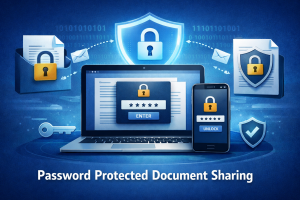
Password protected document sharing allows senders to secure files with an additional layer of authentication before recipients can access the content. Instead of relying solely on a link or email attachment, recipients must enter a password before viewing the document.
This extra layer of security significantly reduces the risk of unauthorized access while providing greater control over sensitive information.
As cybersecurity threats continue to grow and data privacy regulations become stricter, password protected document sharing is rapidly becoming a standard business requirement rather than an optional security feature.
Password Protection Isn’t the Same as Control
Password protection is often mistaken for secure document control. In reality, it only protects the front door.
Once a recipient enters the password, they typically gain full access to a downloadable file — and from that point onward, the sender loses visibility and control.
Modern document security requires more than access restriction. It requires ongoing control over how the document is viewed, not just who can open it.
That’s why platforms like FileRecall go beyond password protection by introducing view-only streaming and recall-based access control.
Why Traditional Document Sharing Creates Risk
For decades, email attachments have been the most common way to share documents.
While convenient, email attachments provide very little control after delivery.
Common risks include:
Documents being forwarded without permission
Unauthorized recipients gaining access
Files being stored indefinitely
Loss of visibility after sending
Increased risk of accidental disclosure
Similarly, cloud storage platforms often allow users to create sharing links that can be copied and distributed beyond the intended audience.
Even when access permissions are configured correctly, users frequently underestimate the risks associated with document sharing.
Password protected document sharing helps reduce these risks by requiring an additional authentication step before access is granted.
👉 Related reading: Best Way to Send Password Protected Files
How Password Protected Document Sharing Works
Modern secure document sharing platforms typically use cloud-based delivery systems rather than traditional email attachments.
The process is straightforward:
👉 Start Free Trial (No Credit Card Required)
Step 1: Upload Your Document
Users upload documents securely to a protected platform.
Examples include:
PDFs
Contracts
Financial reports
Presentations
Images
Videos
Investor decks
Confidential business documents
Step 2: Apply Security Controls
The sender can configure various access controls including:
Password protection
Expiry dates
Download restrictions
Watermarking
Access permissions
Activity tracking
Step 3: Share Securely
Recipients receive a secure access link rather than a permanent attachment.
Access is only granted once the correct password has been entered.
Step 4: Monitor Activity
Advanced platforms allow users to track engagement and monitor document activity after sharing.
This creates significantly more visibility than traditional file sharing methods.
👉 Related reading: How to Recall a Sent File
Benefits of Password Protected Document Sharing
Enhanced Security
The primary benefit is obvious: stronger security.
Even if a sharing link is accidentally forwarded, unauthorized individuals cannot access the document without the password.
This simple layer of protection can prevent many common security incidents.
Reduced Risk of Data Breaches
Data breaches often occur due to human error rather than sophisticated cyberattacks.
Password protection helps reduce the likelihood of accidental exposure by adding another barrier between sensitive information and unauthorized users.
Better Control Over Confidential Information
Organizations handling sensitive documents require greater control over who can access information.
Password protected document sharing ensures that access is limited to intended recipients.
Improved Client Confidence
Clients expect businesses to protect their confidential information.
Using secure sharing methods demonstrates professionalism and a commitment to information security.
Regulatory Compliance Support
Many industries face increasing compliance obligations regarding data protection and privacy.
Password protected document sharing can support broader compliance initiatives by helping organizations control access to sensitive information.
👉 Related reading: Can You Revoke Access to a Shared File?
Password Protection vs Traditional Email Attachments
The difference between these approaches is significant.
Traditional Email Attachments
No ongoing control
Can be forwarded freely
Limited visibility
No recall capability
Difficult to track activity
Password Protected Document Sharing
Controlled access
Password authentication
Enhanced visibility
Better security
Additional protection layers
For organizations sharing sensitive information, the benefits are substantial.
👉 Related reading: How to Track Who Opened a File?
👉 Start Free Trial (No Credit Card Required)
Industries That Benefit from Password Protected Document Sharing
Legal Services
Law firms routinely exchange highly confidential information.
Examples include:
Contracts
Court documents
Settlement agreements
Discovery materials
Password protection helps maintain client confidentiality and reduce security risks.
Accounting and Financial Services
Financial professionals often share:
Tax returns
Audit reports
Financial statements
Investment documents
Protecting this information is essential for maintaining trust and regulatory compliance.
👉 Related reading: Secure File Sharing for Accountants
Healthcare
Healthcare providers handle sensitive patient information and require secure methods of communication.
Password protected document sharing helps reduce unauthorized access risks.
Startups and Technology Companies
Technology companies frequently exchange:
Intellectual property
Product roadmaps
Investor materials
Strategic plans
Password protection helps safeguard valuable business information.
Media and Entertainment
Creative industries often distribute:
Scripts
Production documents
Marketing assets
Confidential project materials
Secure sharing helps protect intellectual property from unauthorized distribution.
👉 Related reading: Secure Due Diligence Document Sharing
Beyond Password Protection: Advanced Document Security
While password protection is important, modern secure sharing platforms offer additional capabilities.
File Recall
One of the biggest limitations of traditional document sharing is the inability to recall a file after it has been sent.
Modern platforms allow users to revoke access instantly, maintaining control even after delivery.
Access Tracking
Knowing who viewed a document and when can provide valuable business intelligence.
Access tracking allows organizations to monitor recipient engagement while improving accountability.
Expiry Controls
Documents do not need to remain accessible forever.
Expiry settings automatically disable access after a specified period.
Watermark Protection
Watermarks discourage unauthorized sharing and provide additional protection for sensitive content.
Download Restrictions
Organizations may choose to allow viewing while preventing downloads.
This provides greater control over document distribution.
Best Practices for Password Protected Document Sharing
To maximize security, organizations should follow several best practices.
Use Strong Passwords
Weak passwords undermine security.
Choose passwords that are:
Unique
Difficult to guess
Not reused across multiple systems
Share Passwords Separately
Avoid sending passwords through the same communication channel as the document link.
Separate communication channels improve security.
Limit Access Duration
Use expiry settings whenever possible.
Shorter access windows reduce long-term risk.
Monitor Activity
Review document access logs regularly.
Unexpected activity may indicate unauthorized access attempts.
Revoke Access When Necessary
If a document is no longer required, disable access immediately.
Maintaining control is one of the primary advantages of secure document sharing.
Choosing the Right Password Protected Document Sharing Platform
When evaluating solutions, consider:
Security Features
Look for:
Password protection
Encryption
Access controls
Recall capabilities
Tracking and Visibility
Advanced analytics provide greater insight into document engagement.
Ease of Use
Security solutions should remain simple for recipients.
Complicated systems often reduce adoption.
Scalability
Choose a platform that can support future growth and increasing document volumes.
Ongoing Control
The ability to modify permissions after sharing is increasingly important for modern businesses.
The Future of Password Protected Document Sharing
Document security expectations continue to evolve.
Organizations increasingly demand:
Real-time visibility
Access tracking
Recall functionality
Permission management
Enhanced document control
Password protection remains an important foundation, but businesses are increasingly looking for comprehensive document control platforms that provide security before, during, and after sharing.
👉 Start Free Trial (No Credit Card Required)
Conclusion
Password protected document sharing provides a simple yet highly effective way to protect sensitive information online.
By requiring authentication before access is granted, organizations can significantly reduce the risk of unauthorized viewing while improving control over confidential documents.
When combined with modern features such as file recall, access tracking, expiry controls, and watermark protection, password protected document sharing becomes a powerful tool for protecting business information in an increasingly digital world.
Organizations that adopt secure document sharing practices today are better positioned to protect their data, maintain compliance, and build trust with clients, partners, and stakeholders.